Miracle AI
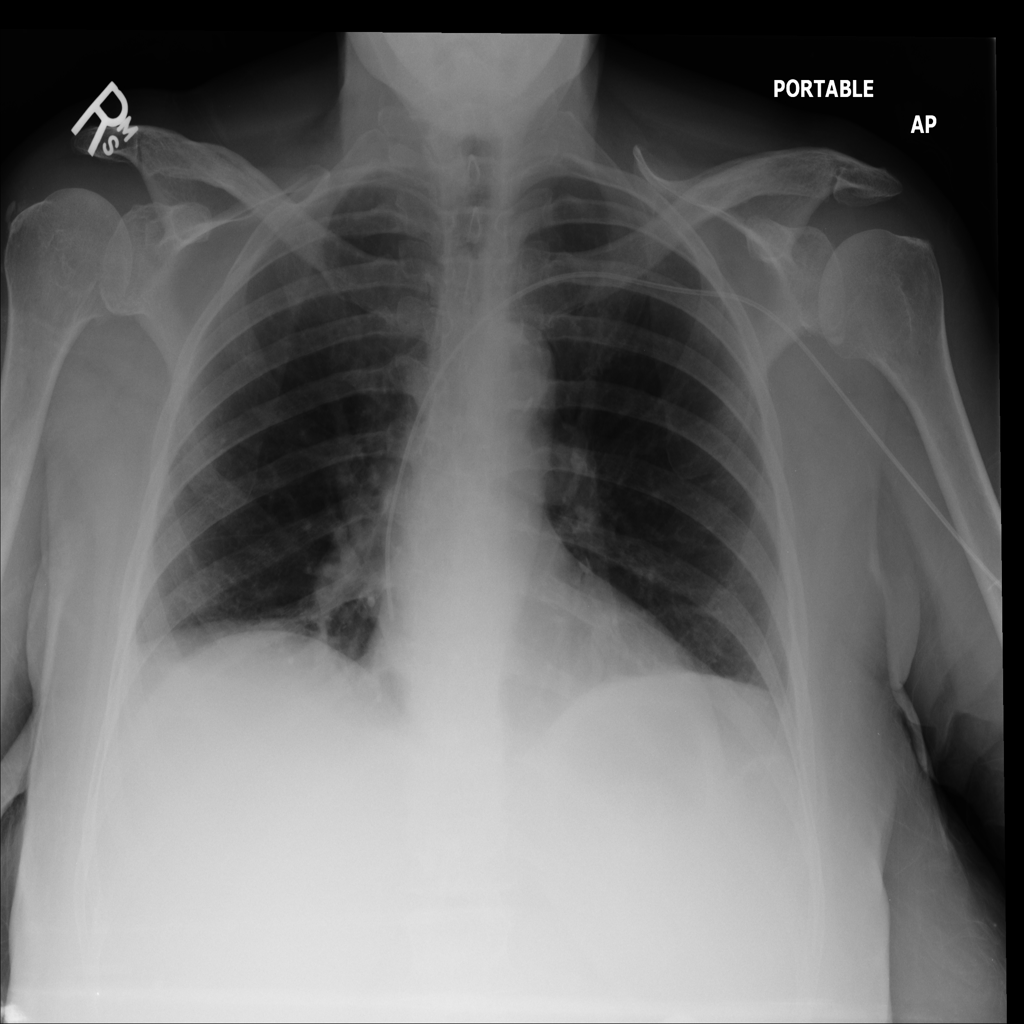
Revolutionary AI-powered medical imaging diagnosis for CT/X-Ray chest analysis. Transforming radiology with cutting-edge machine learning technology.
Heatmap Analysis
Advanced heatmap system compares images to training models, preventing false predictions by validating image similarity to training data.
Image Regions
Bright pixels in heatmaps indicate high-influence regions. Changes in these areas significantly impact predictions.
Disease Prediction
Probability-based disease prediction after learning from test results. 50% indicates insufficient data for prediction.


About Miracle AI
The story behind revolutionary medical AI technology born from personal tragedy and driven by the mission to save lives.
Miracle AI was created by Prakhar Biswas, a 14-year-old innovator who witnessed the devastating loss of his grandfather to HRCT complications during the COVID-19 pandemic. This personal tragedy sparked a mission to revolutionize medical imaging and prevent similar losses through advanced AI technology.
The experience highlighted critical gaps in medical imaging diagnosis and the urgent need for accessible, accurate diagnostic tools that could assist healthcare professionals in making faster, more informed decisions.
Personal Tragedy
Prakhar witnesses his grandfather's passing due to HRCT complications during COVID-19, inspiring the creation of Miracle AI.
Research Begins
Initial research and development of AI algorithms for medical imaging analysis, focusing on chest X-rays and CT scans.
Academic Support
Receives backing from University of Arizona and Arizona State University research programs.
Medical Institution Partnership
Collaboration established with CDRI-Lucknow for advanced medical research and validation.
Global Recognition
In talks with WHO and Tenet Healthcare for potential implementation in global healthcare systems.
University of Arizona
Research collaboration in advanced medical imaging and AI algorithm development.
Arizona State University
Technical support and validation of AI models through their biomedical engineering program.
CDRI-Lucknow
Medical research partnership with Central Drug Research Institute for clinical validation.
Miracle AI is currently in discussions with major healthcare organizations:
- World Health Organization (WHO) - Potential implementation in global health initiatives
- Tenet Healthcare - Integration into hospital systems across the United States
- International Medical Centers - Deployment in underserved regions worldwide
Our mission is to revolutionize the field of radiology, which has seen limited technological advancement since the discovery of MRI. We aim to:
- Assist radiologists in making faster, more accurate diagnoses
- Reduce healthcare disparities by providing AI-powered diagnostic tools
- Prevent medical tragedies through early detection and intervention
- Make advanced medical imaging accessible in underserved regions
- Bridge the gap between technology and compassionate healthcare
Technical Architecture
Deep dive into the AI technology, security measures, and compliance standards that power Miracle AI.
Miracle AI maintains the highest standards of medical data protection:
- Data Encryption: All patient data is encrypted using AES-256 encryption
- Automatic Deletion: Patient images and data are automatically deleted after analysis
- Zero Storage: No patient data is stored on our servers
- Secure Transmission: All data transfers use TLS 1.3 encryption
- Access Controls: Multi-factor authentication and role-based access
- Audit Logs: Complete audit trail of all system interactions
Deep Learning Framework: TensorFlow 2.x
Model Type: Convolutional Neural Networks (CNN)
Training Data: 100,000+ medical images
Validation Accuracy: 99.0%
Processing Time: 30 seconds
Model Size: 45MB compressed
Image Preprocessing: Automated normalization and augmentation
Noise Reduction: Advanced filtering algorithms
Feature Extraction: Multi-scale feature analysis
Quality Assurance: Automated image quality assessment
SSIM Validation: Structural similarity index
Platform: Google Cloud Platform
Compute: GPU-accelerated processing
Scalability: Auto-scaling based on demand
Uptime: 99.9% availability guarantee
Global CDN: Optimized worldwide access
Training Dataset: ChestX-ray14, MIMIC-CXR
Validation Method: 5-fold cross-validation
Optimization: Adam optimizer with learning rate scheduling
Regularization: Dropout, batch normalization
Augmentation: Rotation, translation, scaling
Model Compression: Quantization and pruning
Inference Speed: TensorFlow Lite optimization
Memory Usage: Efficient tensor operations
Batch Processing: Optimized for multiple images
Edge Computing: Browser-based inference
Gradient-based: Saliency maps and gradients
Heatmap Generation: Class activation mapping
Feature Visualization: Layer-wise analysis
Uncertainty Quantification: Confidence intervals
Interpretability: Human-readable explanations